Echo Test in Bangalore
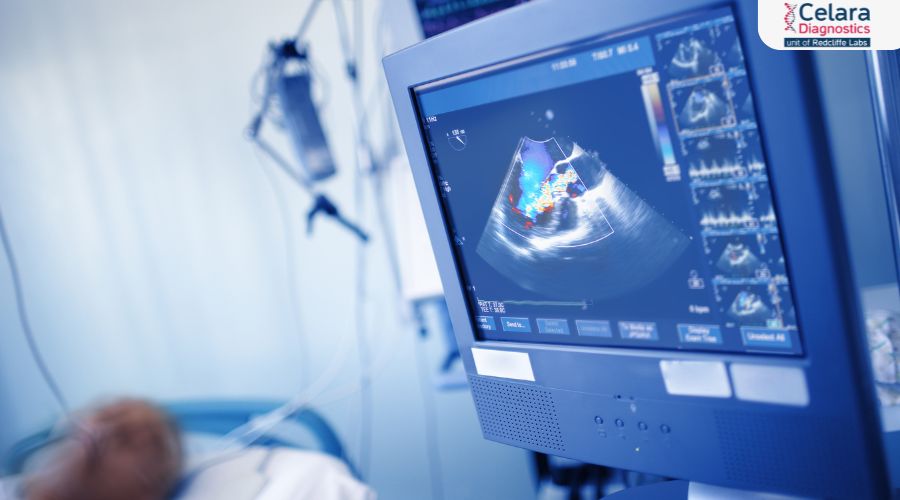
Also known as an echocardiogram test, an echo test is a non-invasive medical test. It is an ultrasound scan that uses high-frequency waves to produce images of the heart. An echocardiogram test is usually performed for leaky heart valves to help diagnose heart valve disease, regurgitation, and stenosis.
A doctor recommends an echo test to examine the heart and nearby blood vessels. Common symptoms associated with an echo test include chest pain, feeling sick, and dizziness.
An echo test reveals changes in the size of the heart, its pumping strength, and a disease in the heart valve. This helps an expert assess your heart condition, including a slight chance of heart failure. The echo test helps a cardiologist assess the heart’s structure and function, including its chambers, valves, and blood flow.
6 Different Types of Echocardiogram Tests in Bangalore
An echo test is categorized into the following:
1. Transthoracic Echocardiogram (TTE)
Transthoracic Echocardiogram (TTE) is also known as a heart ultrasound. It is a standard test that is noninvasive, meaning it doesn’t harm the heart. The TTE creates a picture of the heart from outside the body. A contrast dye, often iodine-based, highlights your blood vessels and presents a clearer picture.
2. Transesophageal Echocardiogram (TEE)
A TEE test is suggested when the TTE fails to provide the required details. It evaluates your heart and aorta, the body’s main artery. Unlike the TTE, which presents a heart picture from outside the body, the TEE test creates a heart inside the body.
3. Fetal Echocardiogram
A doctor may order a fetal echocardiogram during pregnancy to check the baby’s heart without using X-rays or surgeries.
- The test is harmless as it involves moving ultrasound waves over the belly of an expecting mom.
4. Stress Echocardiogram
A stress echocardiogram shows how your heart responds to physical activity or stress. A doctor usually suggests a test when he suspects you have coronary heart disease. There may be damage or disease in the major blood vessels of the heart.
5. Doppler Ultrasound
Doppler ultrasound helps check blood flow. An echo expert generates sound waves at specific frequencies and checks how they reflect off the transducer.
6. Point-of-Care (POC) Echocardiogram
A POC echocardiogram determines how well your ventricles pump the blood with each heartbeat.
- Limited and focused are two types of POC echocardiogram.
- Book an echo test in Bangalore from Celara. We offer routine, specialized, and genetic testing to all age groups. We are a PAN India omnichannel service provider providing a full-body checkup at home and urine and blood tests online with home sample collection. The reports are typically available with deadlines.
- Early detection and timely intervention can help prevent complications and improve health outcomes in the future.
What is the purpose of the Echo Test?
An echocardiogram test looks at the heart. It is a diagnostic tool that shows blood movement through the heart chambers and valves. Your healthcare provider may order this test if you complain about having shortness of breath or chest pain.
- The echo test is essential because it helps identify and monitor several heart-related conditions, such as:
- Abnormal heart sounds: An echocardiogram helps a healthcare professional diagnose heart conditions, including abnormal heart rhythm. The expert attaches sensors to the chest, arms, or legs to understand how fast or slow the heart is beating.
- Chest pain or discomfort: An echo test becomes crucial if chest pain, shortness of breath, or discomfort occurs.
- Swelling in the legs, ankles, or feet: An echo test assesses your heart and is combined with an ultrasound of your leg veins.
- High blood pressure or hypertension: When it is difficult to control high blood pressure or hypertension, an echocardiogram test is performed to give an expert insight into the damage caused by high blood pressure in the heart.
- Family history of heart disease: A primary care clinician also orders an echocardiogram test when you have a family history of heart disease that requires monitoring.
- Suspected heart valve problems or cardiomyopathy: The test may be needed when you have some physical signs of heart valve disease. Also, it can affect multiple heart valves.
- Why delay? Book an echo test in Bangalore if you have current signs and symptoms or have sufficient suspicion. Early detection can help maintain a healthy heart and prevent critical cardiac conditions.
What are the benefits of an echo test in Bangalore?
The benefits of an echo test in Bangalore:
- It is 100% safe: Echocardiography involves harmless sound waves called ultrasound and does not involve X-ray exposure, making it safe for the body.
- Early diagnosis: A heart specialist recommends an echo test to detect heart conditions before symptoms worsen. It can also help you and your doctor determine if a heart area has been damaged.
- Quick procedure: An echocardiogram (ECG or EKG) records the heart’s electrical activity. It is a fast procedure that can be completed in 40-60 minutes.
- Clear visuals: Echocardiogram presents clear visuals of damaged cardiac tissue, blood clots, heart valve disease, heart attacks, and more.
- Monitors disease progression: A heart’s echo also serves as a valuable tool in tracking heart conditions.
- Affordable: Get echocardiography with experienced professionals. Book an echo test in Bangalore from Celara at the best available price.
How can you prepare for an echo test?
Echocardiograms (echos) are non-invasive tests and relatively quick procedures. No preparation is required when an echocardiogram is performed outside of the body. On the other hand, when a doctor recommends a transesophageal echocardiogram, he might ask you to avoid eating or drinking anything for at least 6 hours before the test.
- Discuss your doubts and concerns with your doctor about preparing for the echo test in Bangalore. Ensure you follow all guidelines to help improve the accuracy of your test results.
Procedure for the Echo Test in Bangalore
The procedure for the Echo Test in Bangalore is simple and hassle-free. A sonographer or an echo expert will perform the following steps:
- He will ask you to remove your clothes from the waist up. If necessary, you can wear a hospital gown to cover yourself during the exam.
- He will instruct you to lie on the examination table, usually on your back or side,
- Then, he may inject a saline solution or gel into your chest to help the sound waves appear clearer on the echocardiogram.
- Then, he will place a transducer on your chest, emitting sound waves.
- The sound waves will create moving pictures, showing the size and shape of your heart and how well it is pumping blood.
- A sonographer may ask you to move into different positions, hold your breath, or exercise lightly during the test.
- The test takes between 40 and 60 minutes to complete.
- Your doctor will review your images and share the results with you.
- Additionally, sometimes doctors may also perform other echo tests, such as:
- A stress echocardiogram is often included in a stress test. It produces images of your heart when it is beating fast. It can help diagnose ischemic heart disease, coronary heart disease, heart failure, and heart valve disease.
- Transesophageal echocardiogram: During this test, a doctor inserts a probe with a transducer down the esophagus to provide a clearer image of the heart.
- Fetal echocardiogram: This is a pregnancy test that usually occurs between 18 and 22 weeks of pregnancy. It helps assess the fetal heart’s structure and function.