
Your bones play a critical role in your body. Besides supporting your body, protecting vital organs, and allowing movement. With age, the strength of your bones gradually diminishes, and hence the chances of fractures, osteoporosis, etc., increase.
- However, if bone loss is detected early, it can be managed effectively with timely medication.Looking for a DEXA scan in Bangalore? This comprehensive guide explains what a DEXA scan is, how a bone density test works, who needs it, its safety, preparation, cost considerations, and where to book a reliable BMD test in Bangalore

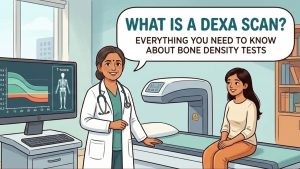
What Is a Bone Density Test and How Does It Work?
Sometimes doctors refer to a bone density test as a Bone Mineral Density (BMD) test. It measures the mineral content in your bones and then compares it to that of a healthy young adult as well as to people of your age and sex. The test is a diagnostic tool for assessing bone loss and fracture risk.
The test produces two key scores:
-
- T-score: It shows the severity of bone loss and the risk of osteoporosis.
-
- Z-score: It compares the bone density of the person being tested with that of the age-matched individuals.
If your score is low, it means that your bones are not so strong and that you certainly have a higher risk of getting a fracture. Also, the score determines whether you need further evaluation or treatment.
DEXA Scan for Osteoporosis: Why It Matters
A DEXA scan for osteoporosis helps detect bone loss long before fractures occur. Osteoporosis often progresses silently, without symptoms, until a fracture happens.
Upon confirmation of low bone density, the doctor will:
-
- Recommend lifestyle changes.
-
- Start calcium or vitamin D supplements.
-
- Prescribe medicines when necessary.
-
- Monitor treatment effectiveness over time.
Early diagnosis significantly reduces fracture-related disability and improves long-term bone health.
Who Should Get a DEXA Scan?
A DEXA scan is advised for people who have a higher chance of losing their bones, including:
-
- Women 65 years and older
-
- Men 70 years and older
-
- Postmenopausal women with risk factors
-
- People who have broken bones from minor injuries
-
- People who have been on steroids for a very long time
-
- People with thyroid problems, diabetes, or autoimmune diseases.
Especially if you are worried about your bone strength, a bone density test in Bangalore can provide valuable insights.
Key Benefits of a Bone Mineral Density Test
A DEXA scan can bring several clinically proven benefits to the patient, including:
-
- Finding bone loss early, before it causes fractures.
-
- Accurate diagnosis of osteoporosis
-
- Assessment of fracture risk
-
- Tracking changes in bone density
-
- Guidance for treatment and lifestyle changes
These benefits make it an essential component of preventive health screening, particularly for older people.
Is a DEXA Scan Safe?
Yes, a DEXA scan is considered safe and non-invasive. The amount of radiation it emits is very small, much less than you would get from a regular chest X-ray, and does not require any injections or contrast agents.
The procedure is safe for most adults. In case of pregnancy, the woman is advised not to have a scan unless her gynecologist recommends one. In case you suspect a pregnancy, be sure to tell the technician before the scan.
How Long Does a DEXA Scan Take?
A DEXA scan usually lasts about 10 to 20 minutes. The process is totally painless, and all that’s required of you is to lie still on the scanning table while images of the areas are taken.
No recovery time is needed, and you can resume your normal activities right after the test.
Do I Need Fasting Before a Bone Density Test?
No, fasting is not required. You can eat your usual meals, drink your usual beverages, and take your usual medicines unless you are advised otherwise.
However, it is advised not to take calcium supplements for at least 1 day before the scan, as they may affect test results.
Preparing for a DEXA Scan
For precise readings, please follow these easy preparation steps:
-
- Wear loose-fitting, comfortable clothes without metal buttons or zippers.
-
- Do not take calcium supplements the day before the test.
-
- Remove your belt, jewelry, or any metallic accessories.
-
- Tell the expert if you have recently undergone a contrast imaging test.
Following these guidelines helps ensure smooth and accurate scanning.
What Happens During the DEXA Scan?
During the procedure:
-
- You will lie down on your back on a padded table.
-
- An imaging arm moves across the areas of the body (hip, spine, forearm) being scanned.
-
- For a few minutes, you have to stay still.
The process is very quiet; you won’t experience any pain, and no enclosed spaces are used, making it an ideal method for claustrophobic patients.
How Often Should a DEXA Scan Be Done?
The frequency of a DEXA scan depends on age, risk factors, and prior results.
-
- Low-risk individuals: A scan every 3-5 years would be adequate.
-
- Osteopenia: If your bone density is below normal but no osteoporosis is detected, scans should be done every 2-3 years.
-
- Osteoporosis or ongoing treatment: If you have osteoporosis or ongoing treatment, scans should be done annually or every 2 years at most.
Your doctor will decide the appropriate interval based on your bone health status.
Bone Health Checklist: When to Consider a DEXA Scan
Consider scheduling a DEXA scan if you:
-
- Have chronic back or hip pain.
-
- Have suffered from height loss
-
- Have a family history of osteoporosis.
-
- Are postmenopausal
-
- Taking steroids for a long time
-
- Have a low body weight.
This checklist supports proactive bone health management.
How to Choose the Right Center for a DEXA Scan in Bangalore
Selecting a diagnostic center should be done based on the following factors:
-
- Advanced DEXA equipment
-
- Qualified radiologists
-
- Clear and accurate reporting
-
- Short report turnaround time
-
- Transparent pricing
Celara Diagnostics offers state-of-the-art imaging technology and experienced radiology teams to ensure reliable bone density assessment.
DEXA Scan in Bangalore: Cost and Booking Considerations
The cost of a DEXA scan in Bangalore depends on the location, the number of areas scanned, and the reporting expertise. The majority of well-known diagnostic centers offer reasonably priced services and accurate results.
Scheduling in advance and selecting certified laboratories ensures quality and prompt reporting.
Conclusion
A DEXA scan is a simple yet powerful tool for measuring bone strength and preventing osteoporosis-related problems. Bone density testing in the early stages supports informed medical decisions such as age, medical conditions, or lifestyle.
If you are planning to book a DEXA scan in Bangalore, choosing Celara Diagnostics, a trusted diagnostic provider can help ensure accurate testing, clear pricing, and expert reporting to support long term bone health.
FAQs
1. What is a DEXA scan?
A DEXA scan is a medical imaging test that primarily measures bone mineral density using low-dose X-rays. It can diagnose osteoporosis, assess fracture risk, and monitor changes in bone strength over time.
The procedure is neither painful nor lengthy, and it is among the most highly recommended ways to check one’s bone health.
2. Who should get a DEXA scan?
Older people, postmenopausal women, fracture patients, those who have been on steroids for a long time, and people with diseases that influence bone metabolism should undergo a DEXA scan. Additionally, doctors may order this test to assess the progress of osteoporosis treatment.
3. Is a DEXA scan safe?
A DEXA scan is perfectly safe since the radiation level used in the procedure is extremely low. In fact, the amount of radiation you are exposed to during the scan is very little compared to that in a routine X-ray.
Moreover, it is non-invasive and does not involve injections. If you are pregnant, always check with your doctor before getting a scan.
4. How long does a DEXA scan take?
A DEXA scan usually takes 10 to 20 minutes. The patient just lies on the scanning table in a relaxed manner while the pictures are taken. It doesn’t cause any pain or inconvenience, nor is there a recovery time or need for post-procedure observation, allowing immediate return to daily activities after the test.
5. Do I need fasting before a bone density test?
No, fasting is not required for a bone density test. You can eat and drink as usual. Still, it is recommended to refrain from taking calcium supplements for 24 hours prior to the scan, as they may affect measurement accuracy. Always follow the lab/doctor’s preparation instructions to improve the accuracy of results.
6. How often should a DEXA scan be done?
The frequency depends on individual risk factors and the previous results. Those at low risk may only need to be tested once every few years.
On the other hand, patients with osteoporosis or those undergoing treatment may be required to have a scan every one to two years, so that their condition can be effectively monitored.